The Office Glow-Up
I've always believed in the importance of showing up put together at work. Some of my mom's best advice was:
"Dress for the job you want, not for the job you have."
That doesn't mean showing up in a suit if you're a Collector—which may or may not have been my entry point into corporate America. But it does mean showing up pulled together.
You dress appropriately for your role,
and then you kick in a little extra polish because,
subconsciously, you're telling people who you are.
Turns out, offices communicate too.
Don't want people coming to see you?
Remove all the lightbulbs from the fluorescent fixtures,
strip the room of any personality,
and either keep your door shut or stare resolutely at your monitor when people speak to you.
They'll get the message without you saying a word. Bravo.
I wanted no part of that, so when I finally landed in a permanent office in Missisippi, it had potential.
Big windows.
Good size.
Solid bones.
But the walls looked like they'd been painted in Secondhand Tan sometime during the Nixon administration, and while our Properties team assured me that was neither the official paint name nor the actual timeline, I remained unconvinced. That was a relief, but I still asked them to update it with something less respiratory illness and more existential surrender.
They chose Repose Gray, which feels exactly like the official color of dashed middle-management hopes everywhere.
Perfection.
(In all seriousness, I actually painted my own house Repose Gray years ago. It's actually beautiful.)
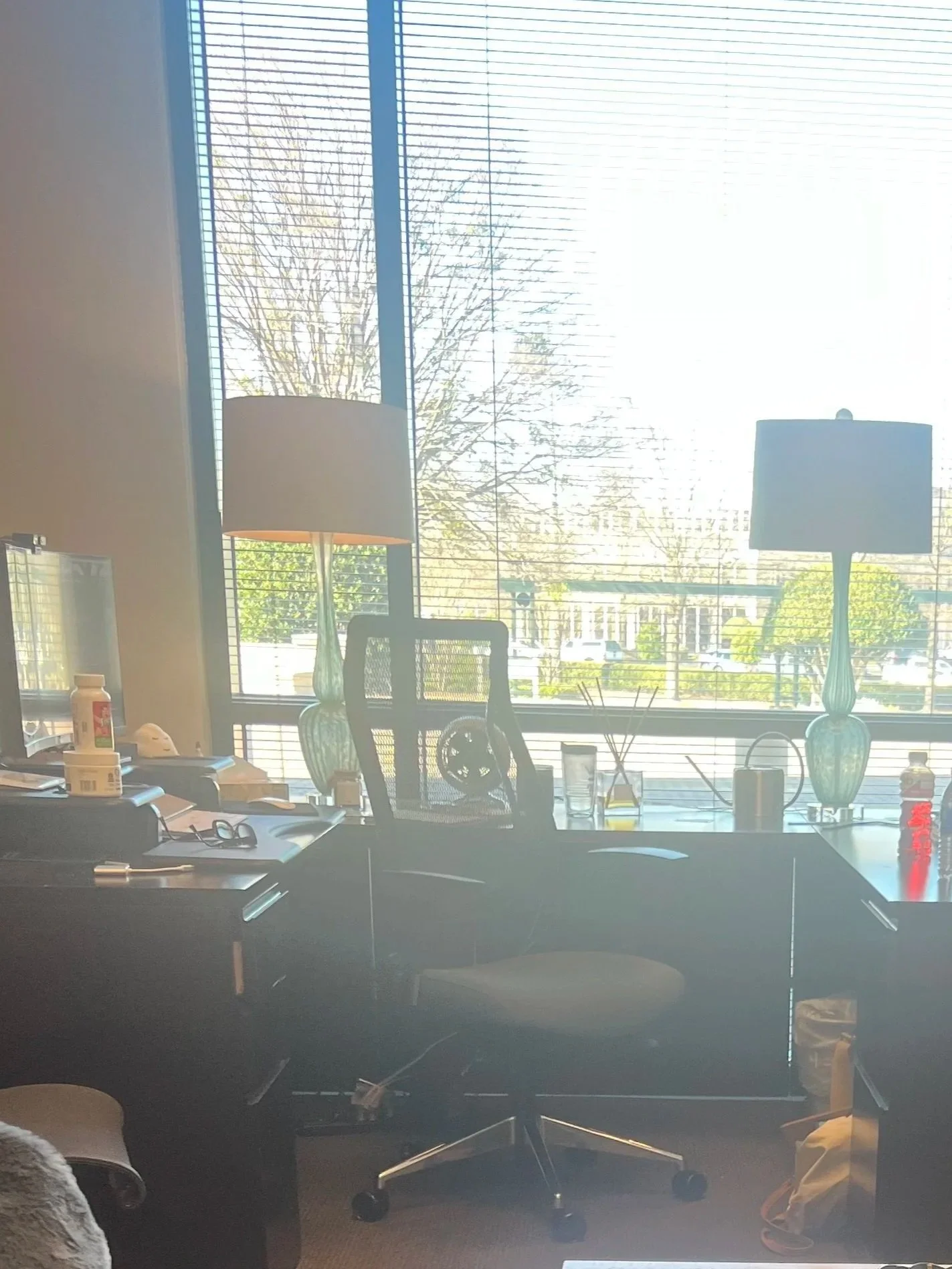
Solid bones. Questionable everything else.
.
Even with the fresh paint, though, my office still looked like my college apartment circa 1993—
functional,
borrowed,
and deeply uninspired.
There was a giant, dark wood U-shaped desk.
A random white contemporary conference table.
Miscellaneous chairs.
The only things that truly sparked joy were two gorgeous lamps I rescued from an empty office in Marketing.
Those lamps were a whole mood.
And that mood was exactly what I wanted.
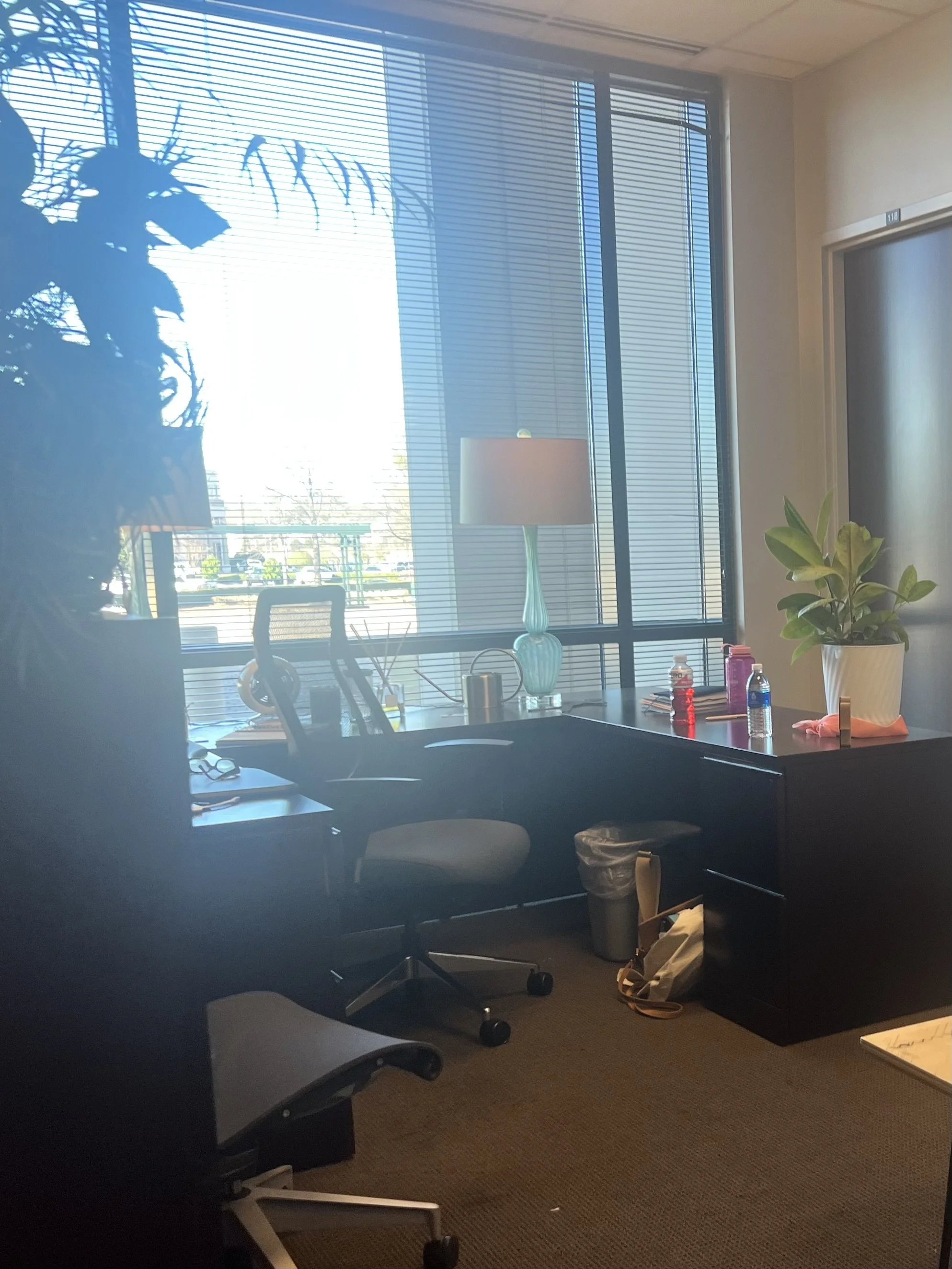
The lamps were doing their best. The rest of the room was not.
When I first moved in, the desk was configured with my back to this BIG, beautiful, floor-to-ceiling window.
Absolutely not.
It violates all principles of Nikol Fung-sway, and if COVID and video conferencing taught us anything, it's that you do not put your back to a giant window unless you are in witness protection.
Properties kindly rotated the desk.
Better.
Except now I spent every video call staring at the closet door behind me in my background, looking like I conducted strategic planning from a moderately upscale dorm room.
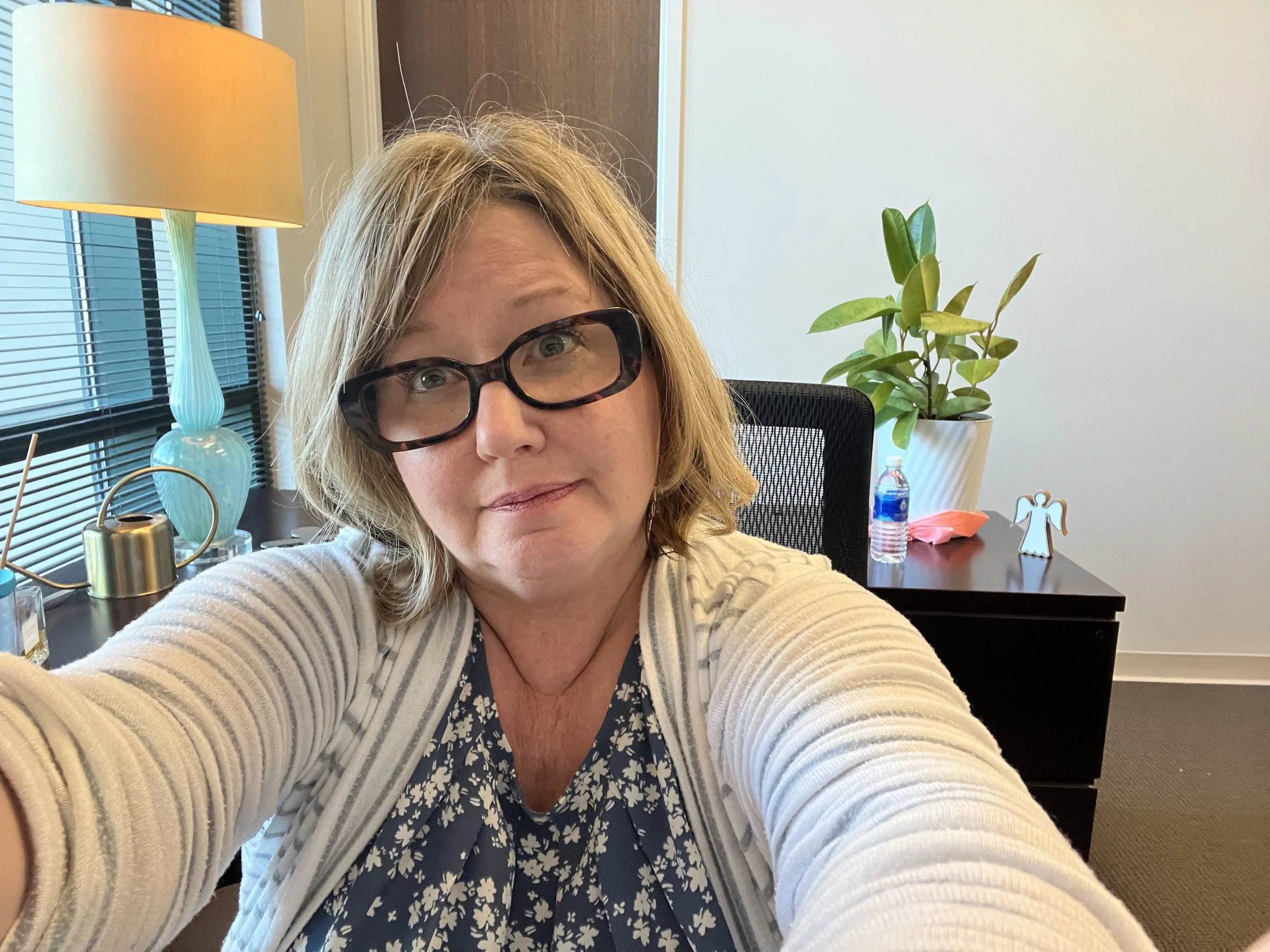
The video conference background
that almost broke me.
At some point, I snapped. With my house finally in cozy condition, I could no longer let this office boss me around. So I did what I always do. I sat in the problem.
And thought about it.
And thought about it.
And thought about it some more.
Because here's my deeply scientific design philosophy:
Figure out how you want a space to function.
Then choose the furniture layout accordingly.
I needed an office where I could do real work and survive endless video calls.
But I also wanted a place where people could come think.
Not formal conversations.
Not awkward conference table energy.
I wanted people relaxed.
Creative.
Collaborative.
A place to brainstorm.
A place to cry.
A place to spill the tea.
Because, let's be honest, my office gets used for all three.
Which meant the conference table had to go.
The giant U-shaped desk wasn't helping either, but it felt immovable.
Until the poor guy in Properties—after approximately our 2,000th conversation—casually said:
"You know this desk doesn't have to stay U-shaped."
Excuse me, sir. What?
And just like that, the whole thing clicked.
We broke apart the desk.
Moved the back console to the closet wall.
Shifted the main desk across the room.
Moved the bookcase.
Pulled in two unused accent chairs and a coffee table from a forgotten sitting area.
And then I did what any emotionally stable adult would do:
logged into Amazon…
and bought a rug,
more lamps (because lamps are everything),
baskets,
tchotchkes,
and a fake olive tree that is apparently wildly convincing.
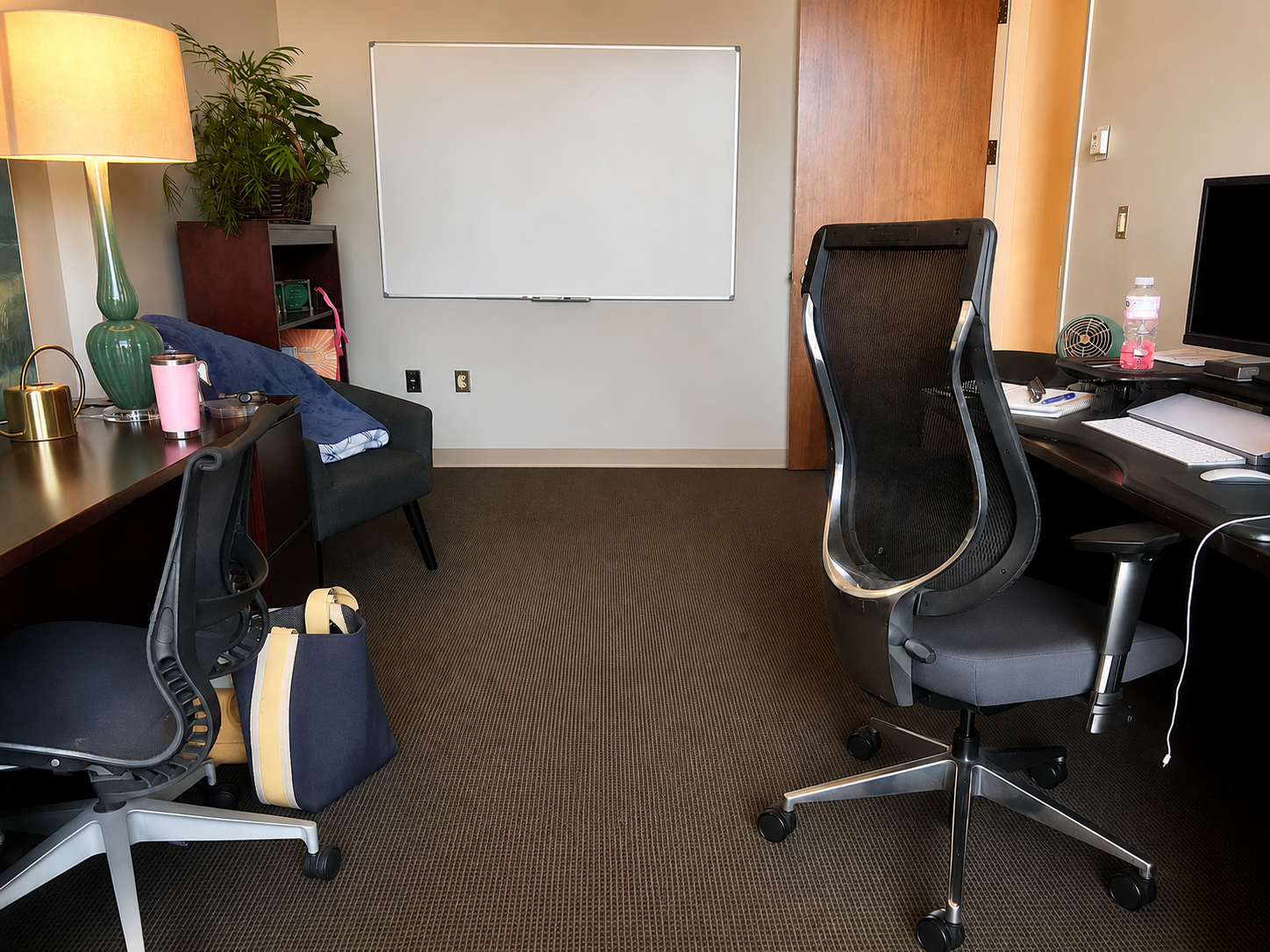
It was coming together. You could feel it.
I also went home,
removed artwork from my own dining room walls,
grabbed unused picture frames,
and slowly started pulling the whole thing together.
Y'all. The transformation was magical.
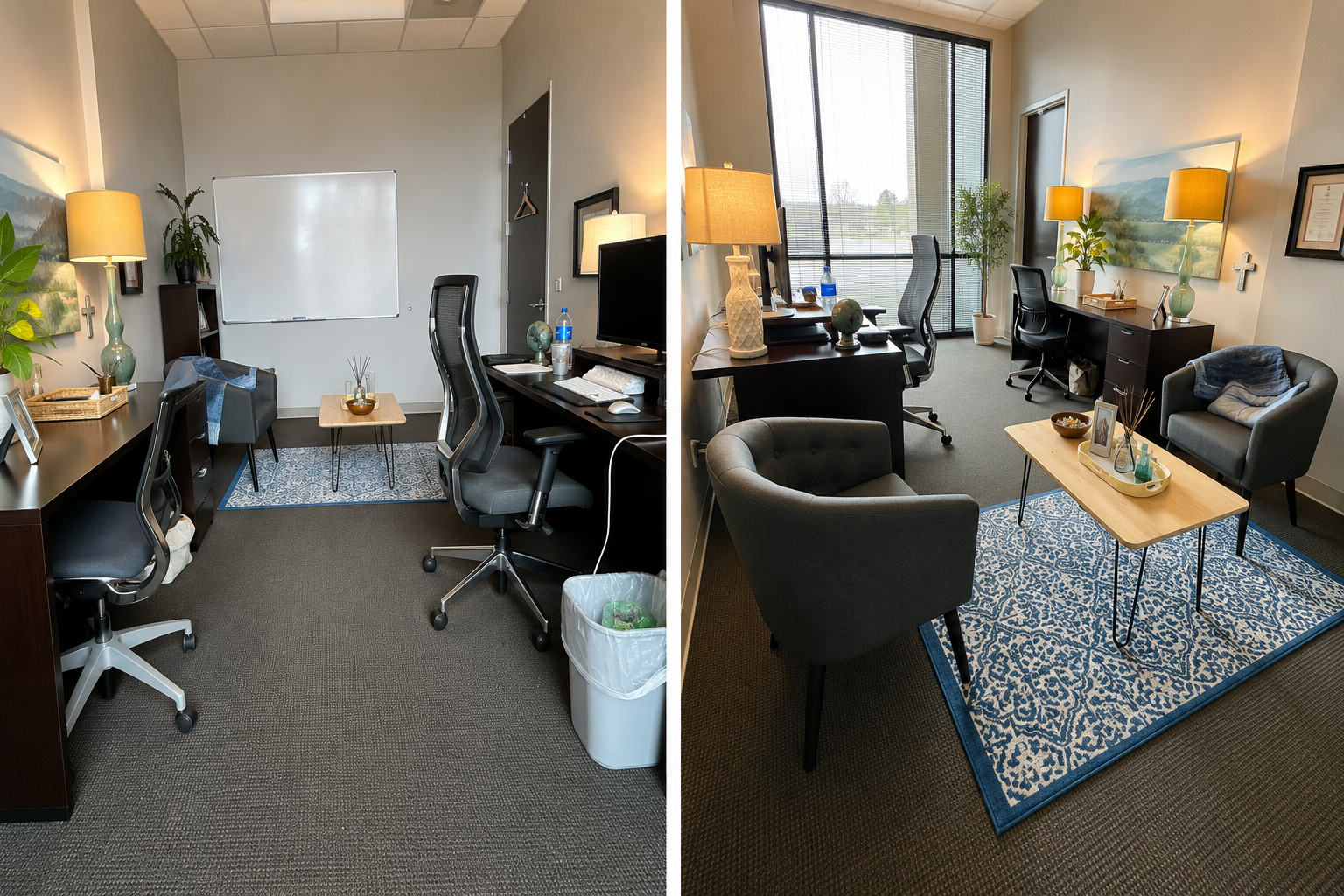
Here she is.
People come into my office to chit-chat. (Sometimes I make them, but still.)
They come in and cry (because there is a blanket, tissues, snacks, and it's me—it's OK to cry).
They come in and spill the tea.
They come in to whiteboard ideas, which may honestly be my favorite part of the whole setup.
At least once a week, someone on a video call asks:
"Did you get a new office?"
No.
And at least two separate men have asked if my olive tree is real.
Reader, it is not.
But apparently the vibe is.
Every morning, I walk into the office I built around two stolen repurposed lamps, a clunky desk, and a whiteboard—and I smile.
No, I didn't get a new office.
But I did dress her for her role,
and then kicked in a little extra polish
because, subconsciously, your office is also telling people something about who you are —
and who they can be in a space.